
Crafting the future: Automation, composites and the Gulf Craft method
Gulf Craft started out over 40 years ago building composite fishing boats and runabouts. In 2003 it launched its superyacht division and by the end of the decade had delivered 18 vessels over 30 metres across four continents. Now the UAE-based shipyard and SYBass member is expanding its facilities, enhancing client services, and diversifying into resort tourism.
At last year’s Dubai International Boat Show, Gulf Craft announced it was restructuring as a holding company. The news was a footnote at the time, but its significance is not to be underestimated as what is now Gulf Craft Group pursues an ongoing strategy of consolidation and diversification. That process is already starting to bear fruit.
“Having different factories in different sites and different product ranges brings pressure to control the way you work and how best to be competitive in local and international markets,” says Abeer AlShaali, Deputy Managing Director at Gulf Craft Group. “We stepped back a bit to see where we are and who is our competition so we can streamline our activities under a unified vision while providing each brand with sufficient space to develop independently.”
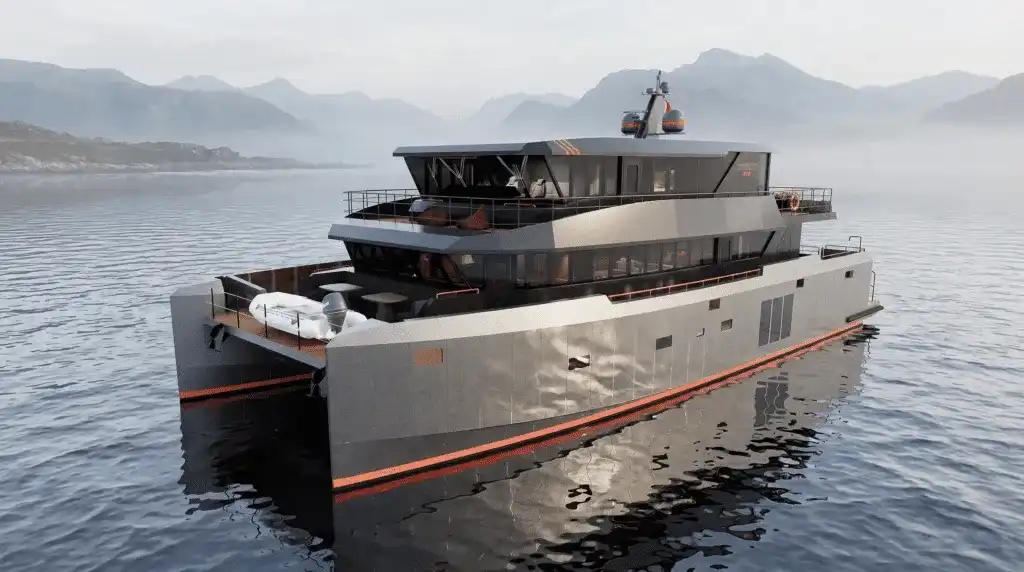
Gulf Craft currently operates out of three facilities – a shipyard Umm Al Quwain and separate service centre in Ajman, UAE, and another yard in the Maldives that builds small passenger vessels. Its product range spans from the leisure lines – Oryx cruisers and SilverCAT multihulls – to the Nomad adventure yachts and Majesty superyacht series, which includes the 56-metre Majesty 175, the world’s largest all-composite production yacht. As part of its corporate restructuring, these facilities are being augmented and the product portfolio remodelled.
Defining the brands
The service centre in Ajman is being upgraded and moving into new premises with a 600-tonne travel lift and berthing for vessels of up to 80 metres to better serve the growing number of superyachts visiting the Gulf region. With the new service facility expected to be operation by the summer, the existing yard will be repurposed as a manufacturing facility for the smaller leisure lines, which will free up space at the main facility in Umm Al Quwain to focus on the Nomad and Majesty series. At the same time, a marketing effort is under way to rationalise brand perception of the group’s four brands that cater to different demographics and different users.
“Majesty Yachts has always been about five-star luxury superyachts and everyone knows what it stands for,” says Gulf Craft Marketing Manager Alexander Souabni. “The Nomad adventure range has not been shown in Europe or the US, but it resonates with a very strong niche and I’m looking forward to relaunching the brand, because part of the new company structure is about consolidating the way we perceive and present each brand. Not just externally but also internally, because once you’ve internalised perceptions, it's much easier to communicate them to our markets in the US, Europe, Australia, and here in the Gulf.”
In the same vein, Gulf Craft recently set up a new process department with the aim of enhancing closer relationships with its superyacht clients and continuously improving the in-build experience. To reduce paperwork, for example, it will soon be possible to sign off new work orders online and a new dashboard is in development that will allow owners to follow the build of their yachts remotely.
“In the past it was the sales team that looked after these things, but we felt we needed a dedicated department,” says Costas Eliopoulis, Chief Process Officer. “Our job is to really get to know the client inside and out, which helps us in a variety of different ways to build stronger relationships and increase client confidence.”
Gulf Craft Maldives
Gulf Craft Maldives was set up in 2002 to build small service vessels for transporting people and goods between the coral atolls that make up the marine republic. Because the products and client profile are very different from Gulf Craft’s yachting production, the shipyard was allowed to operate semi-independently and became by far the largest supplier of such craft in the region. In 2022, Eliopoulis was dispatched to optimise the management, engineering and production processes at the Maldives factory. As former quality control manager and then general manager of production at Gulf Craft, he was able to boost both efficiency and profitability. He was also tasked with reviewing the local markets and especially water transport for the region’s high-end resorts.
“What we found was that our luxury transport craft were not in sync with market expectations,” recalls Eliopoulis. “Wealthy holidaymakers are spending up to $25,000 per night at these resorts; they arrive First Class or by private plane, and we needed to offer vessels that provided a similar transport experience on the water. By listening to the needs of 5-star resorts in the Maldives, we developed an entirely new line of multihull limousine tenders that combine exceptional style, elegance, and comfort to meet the premium standards of luxury transport.”
It is not just the boats that are being upgraded. The existing shipyard in Thilafushi will become a one-stop refit and service centre as the finishing touches are put to a brand-new facility of more than 74,000 square metres in North Male Atoll that can build up to 72 feet. This new shipyard, which will double production with an eye also on export, is just the first phase of an ambitious development project for a five-island atoll owned by Gulf Craft that includes luxury residencies, a 5-star resort complex, and even a submerged restaurant. With the shipyard already operational, the first of these real estate projects is due to open in spring 2025.
“At our core we are boat builders and anything else that we do is going to be connected with being out on the water,” says Abeer AlShaali. “Our investment and diversification in the Maldives is all part of that, but it also gives us the agility to be able to generate other revenue streams in an industry that is far from recession-proof.”
Another increasingly relevant function of the Maldives facility is as a stepping stone to the growing Asian markets and beyond. The UAE has bilateral trade agreements with India and Australia that reduce or remove import tariffs – often a stumbling block when exporting luxury goods overseas. Last year, Gulf Craft was a key sponsor of the inaugural Qatar Boat Show in Doha, historically a strong market, and this year it will debut eight brand new models at the Dubai Boat Show. However, the USA is by far its principal market for the larger yachts and remains the focus of efforts to increase sales in that sector.
“Americans understand the advantages of composite in hot and humid climates like Florida, combined with light weight and low draft for cruising the Bahamas,” says Souabni. “That’s not always the case in Europe where opinion is more traditional once and you get over a certain size, the preference is often for steel and aluminium.“
Pushing boundaries
Just prior to the Gulf Superyacht Summit last December, Gulf Craft had five yachts over 30 metres in various stages of construction packed into its main shed in Umm Al Quwain (as the restructuring of facilities progresses the aim is to have to 6-8 superyachts in build at any one time), including two Majesty 120s, the all-new Majesty 112 and Majesty 100 Terrace (both launched at DIBS 2025), and the first 49-metre Majesty 160, which is sold and due to launch in early 2026. When the 160 leaves the shed, minus her radar mast, she will have just 150mm of air room below the gantry crane.
Interestingly, the Majesty 160’s naval architecture was originally conceived by Van Oossanen Naval Architects for a steel hull and adapted for building in composite. Gulf Craft was an early adopter of composites for large yacht construction and pushed the boundaries with its 56-metre (780GT) Majesty 175. Depending on structural and safety requirements, it can combine GRP, Aramid, Kevlar and carbon fibre with PET foam cores using a variety of techniques from laying up by hand and resin infusion to vacuum bagging and resin infusion transfer (RTM). Convincing the class societies that it could build in composite to steel equivalence was a long and arduous process requiring 128 different lab tests, but Gulf Craft’s methodology is now class-certified for structural and fire integrity.
I had not visited Gulf Craft for several years and was impressed by the increase in digital automation with 3- and 5-axis CNC machines and other state-of-the-art technology installed throughout the facility. Six more cutting and milling machines were due to arrive for the interior joinery department alone, as well as a robotic painting and sanding unit with a UV curing booth that will drastically reduce downtime during the painting process.
More remarkable is just how much Gulf Craft manufacturers in-house. This amounts to just about everything apart from the main machinery and systems, including switchboards, steering wheels, escape hatches, pipe flanges, ventilation ducting and the laser-welded, stainless-steel cabinets for the galley. A review is even under way to determine the viability of setting up its own glass factory.
Gulf Craft cannot rely on the same network of local suppliers and subcontractors that have grown up around shipyards in Europe. The only way they can ensure high quality and a reliable supply chain is to do a lot of the work themselves in-house. That takes a large and skilled workforce, some of whom have been with the company for over 30 years and have worked their way up to management positions.
“For 42 years we’ve been building up the industry locally; there was no one else to do it for us,” says Abeer AlShaali. “We now have a strong combination of people from our C-suite to the shopfloor workers that know our products and understand boatbuilding. But we’re always looking at ways we can get better, and I think that is reflected in how we’ve been able to take our yacht construction to the next level.”
In conversation with Mohammed Hussein Alshaali
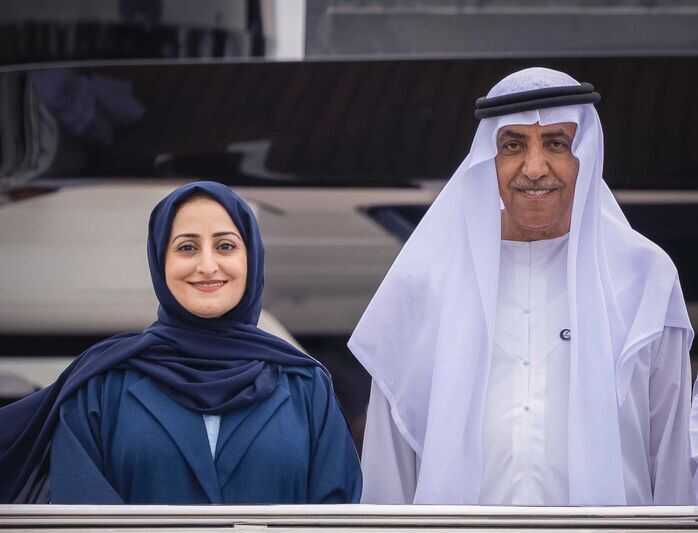
When Mohammed Hussein Alshaali, Chairman of Gulf Craft, co-founded the company in 1982 he was building on a successful career as a diplomat that overlapped with the new business enterprise (his last government position was as UAE Minister of State for Foreign Affairs from 2006-2008). Last year he received a 'Lifetime Achievement Award' at the annual Boat Builder Awards during METSTRADE. The following is an extract of his keynote interview at the Gulf Superyacht Summit in Dubai shortly afterwards.
To what extent has your experience as a diplomat and skill set as a negotiator helped you in the commercial world of luxury yacht building?
To put it very simply, it’s all about public relations and being able to communicate with people. Whether in diplomacy or in business, it’s about communication and I think that is the common dominator with building boats for people. Now it's probably more complicated than that when it comes to politics and here I would like to differentiate between diplomats and politicians: politicians work for themselves or their party; diplomats work for their countries.
After the Majesty 175, you’re due to launch the Majesty 160 next year. What are the advantages of building in GRP at that size compared to steel and or aluminium?
In 2016 when I announced we were building the 175, people thought it was a crazy idea and that it couldn’t be done. But we built the yacht – which is 56 metres overall but also 780 gross tons – and it was successful in every aspect regarding performance, stability, noise and vibration, and so on. I believe GRP has many advantages, especially for places like here in the Gulf where the weather is hot and humid and the water is very saline and unkind to metal. GRP requires less maintenance but it’s also lighter, which means less draft, which is ideal for the shallow cruising grounds here and in the Caribbean, for example. In fact, before announcing the 175, we did a study with the designer Frank Mulder and the results of that study showed that we could realistically build up to 200 feet in GRP. Beyond that size steel or aluminium is the logical choice.
Would you ever consider building in steel or aluminium?
Actually, a few years ago we thought about it, but after a lot of study and research decided against it because we preferred to build on our 40 years’ experience of working with composites. We intend to stay in the same market and size range for composite yachts, so it makes no sense for us to increase our competition with other brands by building metal boats. When you look at the Majesty 160, for example, the competition starts to thin out because at that size our clients come to us because they prefer to have a composite boat. Having said that, we do provide refit and maintenance services for steel and aluminium superyachts and that capacity will increase when our new service facility comes online this year.
Yachting in the Gulf is on the increase and Gulf Craft is part of that. What has to be done to ensure continued growth for your brands?
Well, I don't think anything is guaranteed in the future. If we look at what's happening in the automotive industry, for example, we see things can change very quickly and that raises alarm bells. We survived the 2008 financial crisis and the Covid pandemic because we adapted; we channelled our efforts into thinking and designing for the future. We could do that because we have stayed small and adaptable. If we can diversify and stay nimble, I hope we will not only survive but also thrive.
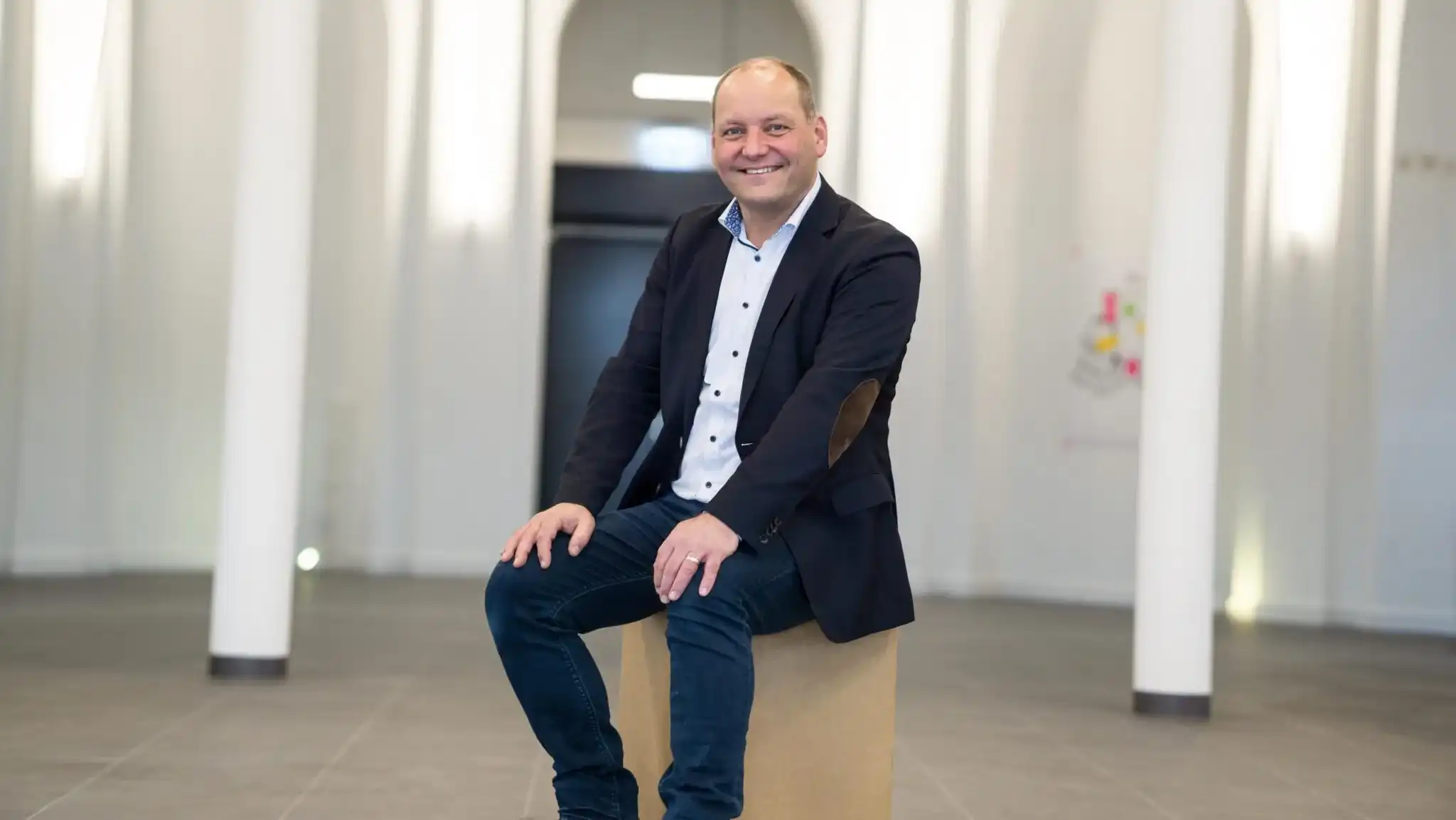
In April 2025, Gulf Craft announced the appointment of Erwin Bamps as its new Chief Executive Officer.
Published At:
Jun 06, 2025
Credits:
Superyacht Times