
UK missing out on £15m in superyacht revenue due to fragmented representation
The UK could capture millions in additional superyacht revenue through coordinated, data-led collaboration – but fragmented industry representation is undermining its ability to convert traffic, secure funding and strengthen its global presence, says Tim Mayer, group sales director at Group 1851.
Eight years have already been lost to duplicated activity, he adds.
A missed intelligence opportunity
Back in 2017, a Cool Route initiative was launched. European Union funding was used to promote yacht and superyacht cruising across north west Europe’s coastal waters. The programme identified 150,000 cruising vessels within two days’ sail of the route, worth an estimated €131m annually to local businesses. Research behind the project highlighted that superyachts were – and are – actively seeking new cruising destinations and – on top of berths – need minimal additional infrastructure (landing pontoons, waste disposal, and recycling facilities).
“The UK hasn’t responded as quickly as it could have done to this intelligence,” says Mayer, who joined the company in early 2026 from MDL Marinas. As a man who loves data, he calculates the UK has captured only a small share of the potential market.
£10m-15m slipping through the net
From January to November 2025, 289 superyachts passed through waters close to the south of England. Based on AIS and geo-tagged data, he’s calculated that UK marinas secured only a minimal share.
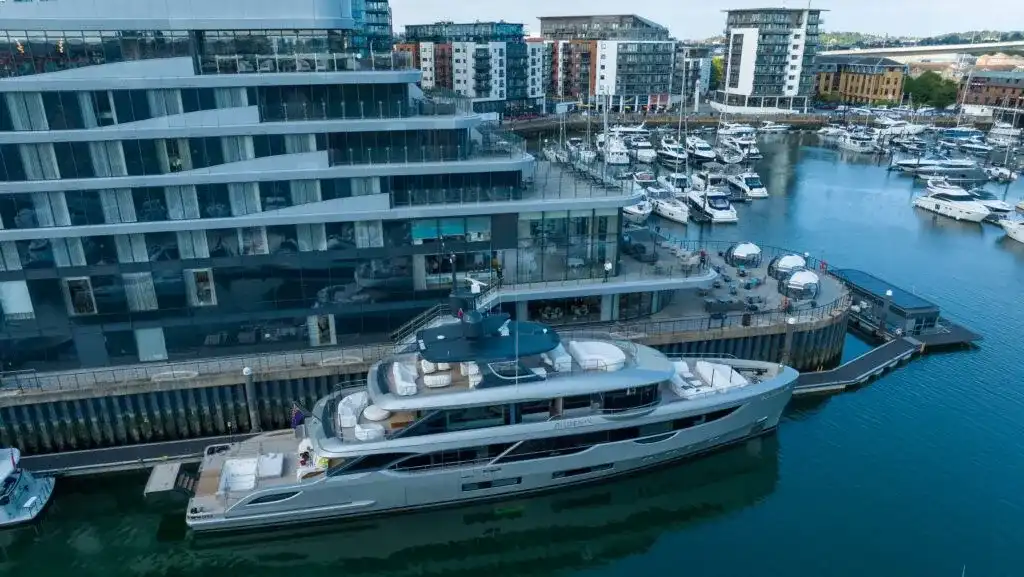
The actual numbers may vary, but it gives an overall picture. Ocean Village secured 31 visits, Gun Wharf Quays 35, and Port of Poole 26.
“The data shows lots of overlap from vessels cruising between UK facilities. Although numbers are rising we are not really winning business from French and Mediterranean alternatives.”
Meanwhile, 258 superyachts bypassed UK marinas, berthing in French ports or anchoring offshore, which represents £10m-15m in lost annual revenue, says Mayer.
He’s calling for a unified approach to make change. The sector doesn’t need more associations, he argues.
“It needs clear objectives, shared data and coordinated action. Networking has its place, but it will not deliver the infrastructure investment, marketing and service improvements required to win market share.
“Monthly drinks events do not constitute a coherent strategy.”
This article was originally published in Marine Industry News magazine. Read more issues here.
Fragmentation stems from UK superyacht market growth
Several organisations operate in the ‘representative’ space, including British Marine’s Superyacht UK (which Mayer recently joined), British Superyacht and the recently formed Superyacht GB. Despite their commitment and some highly skilled people, effort remains fragmented.
“The associations must consolidate – sharing data, aligning messaging, pooling marketing resources and presenting a unified voice to government and investors. Fragmented advocacy weakens funding bids and dilutes the UK’s presence internationally.
“It’s time to abandon the fragmented approach in favour of coordinated stakeholder action. Companies like MGMT Superyacht Agency are doing very well speaking directly to marinas and linking operators. We need to see this approach across the sector.”
Consolidation as a competitive advantage
Mayer says the UK’s clear advantages must be highlighted. Post-Brexit rules allow non-UK-flagged yachts significant VAT savings on yard work when the UK is their first port of call after leaving the EU – potentially saving hundreds of thousands of pounds on major refits. British yards provide high-quality refit and technical services, supported by experienced yacht management, provisioning and security specialists.
Formal collaboration between marinas capable of housing 24-metre-plus vessels should be considered to deliver joint marketing – emphasising UK advantages such as VAT savings, refit and maintenance in water and ashore, London access and uncrowded cruising.
Collaboration could coordinate berthing availability, share infrastructure requirements, cross-promote UK facilities as an integrated network, and establish unified service standards. This approach stops internal competition and presents the UK as a cohesive destination, mirroring successful French models. Mayer says he’s pleased that British Marine’s Superyacht UK is updating its ‘destination document’ and driving the UK agenda at more international boat shows.
Clustering complementary services around major marinas also offers convenience. Mayer cites marinas co-locating technical services such as refit, engineering, and electronics with provisioning, chandlery, and crew facilities.
Targeted upgrades – including high-capacity shore power, strong connectivity, discreet security and premium waste management – would significantly improve competitiveness without major reconstruction.
He also cites the UK’s natural beauty, culture and uncrowded cruising grounds as additional advantages over the Mediterranean.
“Owners expect an integrated offering,” he says. “That requires partnerships with luxury hotels, restaurants, and concierge services, alongside seamless transport links to airports and London. Developing relationships with sporting venues, cultural institutions, and more completes the package.”
Post-Brexit VAT advantage for yachts
But it’s more than working together and a marketing campaign. There needs to be consistent and coordinated lobbying.
“Reducing bureaucratic complexity will improve the UK’s competitive position,” Mayer notes. “Streamlining customs and immigration for crew rotations removes friction from operations. Simplifying VAT and temporary admission for refit operations makes it easier to access post-Brexit advantages. Making environmental compliance straightforward and providing efficient shore pass arrangements demonstrates professionalism. Good administration reduces operational friction and improves the UK’s reputation whilst ensuring vessels can access financial benefits without excessive paperwork. The consolidated association approach should coordinate advocacy efforts to government agencies responsible for these procedures.”
Unite – or lose market share
While he concedes that these efforts are underway by the organisations already named, he says more coordination is needed – as well as better representation from more UK players at industry events like Monaco – and it all needs to be based on data. Mayer insists the sector must become data-driven; collecting traffic statistics, coordinating infrastructure planning, delivering unified marketing and presenting consolidated policy recommendations.
Securing even one-third of the 258 bypassing yachts would significantly boost coastal economies, he says.
“The question is whether UK associations and stakeholders will work together under a unified strategy or continue fragmenting efforts while competitors capture the market?”
Published At:
May 14, 2026
Credits:
Marine Industry News